

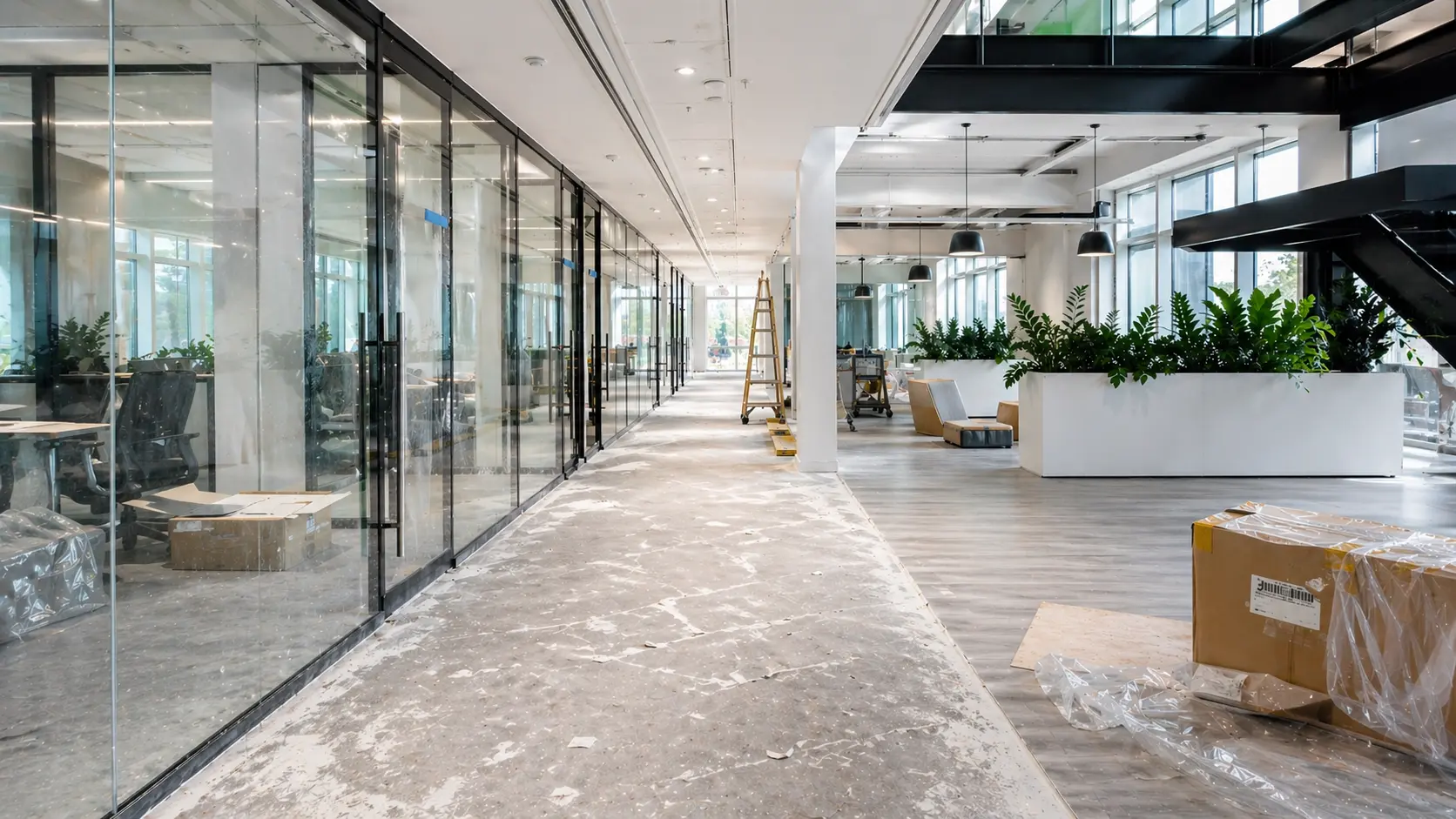
What is post-construction cleaning and why is it essential?
After construction or renovation work, a space may look almost ready, but that rarely means it is truly ready to use. Fine dust, leftover materials, marks on surfaces, residue in corners, and particles suspended in the air are all part of the usual picture. This is where post-construction cleaning comes in. It is not simply a matter of “tidying up” a home or office. It is about removing technical dirt and residue left behind by the work, restoring real comfort, safety, and a polished appearance to the space.
A simple definition of post-construction cleaning
Post-construction cleaning is a specialised cleaning process carried out at the end of construction, renovation, or repair work. Its purpose is to remove construction dust, cement residue, paint, silicone, glue, plaster, and other types of dirt that would not normally appear in everyday cleaning.
This type of cleaning covers far more than the visible floor. It includes skirting boards, walls, frames, glass, doors, cupboards, switches, sockets, handles, joints, corners, and high areas where dust easily accumulates. In many cases, it also requires suitable techniques and products to avoid damaging new, delicate, or recently installed materials.
Why is it different from regular cleaning?
The main difference lies in the type of dirt involved and the technical care required. Regular cleaning deals with household dust, light grease, signs of daily use, and routine maintenance. Post-construction cleaning deals with harsher residue, extremely fine particles, and debris that can adhere stubbornly to surfaces.
In addition, the order of work matters. In post-construction cleaning, it is not enough to clean superficially. A careful method must be followed, usually starting with higher areas and finishing with the flooring, so dirt does not fall back onto areas that have already been treated. Products also need to be chosen carefully, because what removes one type of residue may damage glass, wood, natural stone, or a newly finished surface.
For this reason, confusing post-construction cleaning with regular cleaning often leads to poor results, rework, and frustration. A space may look clean at first glance, yet still contain fine dust, subtle stains, and hidden residue that compromise the final result.
What are the risks if cleaning is poorly done?
When post-construction cleaning is poorly carried out, the problem is not only aesthetic. Fine dust can remain in the air and on surfaces, causing respiratory discomfort, irritation, and a constant sense of uncleanliness. This becomes even more relevant in homes with children, older adults, allergy sufferers, or pets.
There is also a risk of damaging materials. A product that is too aggressive, an abrasive sponge, or poorly executed scraping can leave scratches, stains, or wear on new surfaces. Instead of protecting the investment made in the work, incorrect cleaning can create additional costs.
Another important point is the final perception of the space. After spending time and money on a renovation, nobody wants to walk in and find dust in corners, marks on glass, or visible construction residue in the details. Poor cleaning reduces the visual impact of the final result and creates the impression that the work was never truly completed.
When should post-construction cleaning be done?
Timing makes a major difference to the final result. Cleaning too early is usually a mistake, because the work may still generate more dust, new residue, and small marks that undo the effort. On the other hand, waiting too long is also unhelpful, because certain residues dry, adhere more strongly to surfaces, and become harder to remove. Post-construction cleaning should take place when the work has genuinely been completed and the space is about to be used, furnished, or handed over.
After completion and before occupancy
The safest rule is simple: post-construction cleaning should be carried out after the work is complete and before the space is occupied. This means waiting until there are no more dusty tasks, cutting, sanding, painting, touch-ups, or movement of materials and tools.
This timing matters for two reasons. First, it avoids rework. If cleaning is done before the project is truly finished, dirt is very likely to return soon after. Second, it allows the final result to be assessed properly. Only with a clean space is it possible to clearly evaluate the condition of floors, glass, frames, furniture, walls, and finishes.
In homes, this stage usually comes before moving in or replacing furniture. In offices, shops, or commercial premises, it typically happens before opening, handover, or staff return. In every case, the logic is the same: post-construction cleaning should prepare the space for proper use, not compete with work that is still ongoing.
It is also worth considering the type of work carried out. A small renovation may require a quicker, more localised approach. A larger project demands more time, greater method, and often a phased approach to ensure no area is compromised.
Light post-construction cleaning vs deep post-construction cleaning
Not all post-construction cleaning is equally intensive. In some cases, light post-construction cleaning is enough, particularly for small projects or final-stage work that leaves little accumulated residue. It may be sufficient after painting, simple repairs, or minor replacements, provided the dirt is limited and the materials do not require more technical treatment.
In other cases, deep post-construction cleaning is necessary. This makes sense after full renovations, work that generates heavy dust, cement residue, glue, plaster, silicone, paint, or dirt spread across several rooms. At this point, it is no longer just about removing visible dust. Surfaces must be cleaned thoroughly, treated correctly, and left genuinely ready to live in or use.
Understanding this difference helps avoid two common problems. The first is underestimating what is needed and ending up with an incomplete result. The second is over-specifying the service unnecessarily. The right decision always depends on the scale of the project, the type of residue, the condition of the surfaces, and the standard required for the space’s next use.
Safety in post-construction cleaning
Safety in post-construction cleaning should never be treated as a minor detail. After renovation or construction work, what remains is not just visible dirt. There may be fine dust, small fragments, chemical residue, and particles that can affect the wellbeing of both the person cleaning and those who will later occupy the space. Cleaning properly is not only about appearance. It is also about reducing risks and making the environment safer for everyday use.
One of the most common mistakes is assuming it is enough to start sweeping and wiping surfaces. In reality, that approach can lift even more dust and spread particles through the air, increasing exposure.
Safety therefore starts before cleaning itself begins. It is important to check that there are no loose tools, sharp materials, packaging with leftover product, broken glass, or areas that are still damp and slippery. It also makes a difference to ensure proper ventilation, use protection suited to the type of residue present, and follow a cleaning order that reduces the spread of dirt.
Another essential point is surface care. Post-construction cleaning done without proper judgement can expose people to risk and also damage new materials. This is particularly relevant for flooring, metals, wood, stone, and glass, which may react badly to unsuitable products or overly aggressive methods.
How to reduce respiratory risks
Respiratory risks are one of the biggest concerns in post-construction cleaning because construction dust is not always visible to the naked eye. Particles of plaster, cement, dried paint, and other residue can remain suspended in the air or settle in less obvious places, only to circulate again whenever there is movement, sweeping, or airflow.
To reduce this risk, the first step is to avoid methods that raise unnecessary dust. Dry sweeping usually makes the situation worse. Instead, it is better to use techniques that capture dirt more effectively, such as proper vacuuming and damp removal of particles from surfaces. Cleaning from top to bottom is also important so dust does not recontaminate areas that have already been treated.
Ventilation helps significantly, especially during and after cleaning. Opening windows and encouraging airflow can reduce the concentration of particles, although this should be done carefully so residue is not spread between rooms.
Suitable respiratory protection may also be necessary, particularly when there is heavy dust build-up or when cleaning involves fine, persistent residue. This becomes even more important for people with allergies, asthma, or respiratory sensitivity.
How much does post-construction cleaning cost?
There is no single fixed price for post-construction cleaning, because the cost always depends on the actual work the space requires. Two homes of the same size may have very different quotations if one has only dust and minor residue, while the other has paint splashes, cement residue, silicone, heavily marked glass, and several delicate surfaces. For this reason, discussing cost without context often creates unrealistic expectations.
Rather than looking for the lowest price, it makes more sense to understand what is included. Proper post-construction cleaning is not simply vacuuming and wiping surfaces. It requires method, time, attention to detail, and often products and equipment suited to the materials installed. The right quotation is the one that matches the true condition of the space and the finish standard expected.
Factors that influence the quotation
The first factor is the size of the property. The larger the area, the more time and resources are generally required. But square footage alone does not explain everything. The level of dirt left behind by the work has a major impact on the final cost.
The type of residue present and how difficult it is to remove also matter. Fine dust throughout the property, plaster residue, paint splashes, glue, cement, or silicone all require different approaches. The same applies to the amount of glass, frames, cupboards, bathrooms, kitchens, and finishing details, as these areas increase both the time required and the complexity of the service.
Another important point is the condition of the surfaces. More sensitive or newly applied materials may require greater technical care. Accessibility, the need for specialist equipment, and the desired timeframe can also affect the quotation. In some cases, deep post-construction cleaning will naturally cost more than a light, localised intervention.
When should you hire a post-construction cleaning company?
Hiring a post-construction cleaning company makes the most sense when the work has generated heavy dust, stubborn residue, or dirt spread across several areas. It is also a wise decision when there is limited time before moving in, handing over a property, or opening a commercial space.
In addition, a specialist company may be the best option when there are new materials that require careful handling, such as delicate flooring, glass, stone, wood, stainless steel, or finishes that could be damaged by the wrong products. In these cases, trying to handle everything without experience may end up costing more than seeking professional help from the start.
In practical terms, it is worth hiring a post-construction cleaning company when the goal is not simply to make the space “acceptable”, but to achieve a clean, safe final result worthy of the investment made in the work.
How to request a complete quotation
To request a complete quotation, it is best to provide as much useful information as possible from the first contact. The size of the space, the type of property, the scale of the work carried out, and the current state of the dirt all help define the service more accurately. Recent photographs can also make it much easier to provide a realistic assessment.
It is also worth clarifying whether the work has been fully completed, what type of residue is present, which surfaces are most sensitive, and what timeframe is expected for the cleaning.
Beyond the price, it is important to understand what is included in the quotation. It makes a difference to know whether the cleaning covers glass, the inside of cupboards, removal of specific residue, bathrooms, kitchens, finishing details, and final touch-ups.
Frequently asked questions about post-construction cleaning
Can I do post-construction cleaning without hiring a company?
Yes, in some cases it is possible to handle post-construction cleaning without hiring a company, especially when the work was minor, the dirt is limited, and there is enough time to deal with the space carefully.
However, this is not always the best solution. When there is heavy construction dust, cement residue, paint, glue, silicone, or dirt spread across several rooms, the job becomes much more demanding. The presence of delicate surfaces such as wood, stone, stainless steel, glass, or recent finishes also adds complexity, as these can be damaged by the wrong methods.
In addition, doing the cleaning yourself requires physical effort, available time, and close attention to detail. Often, the challenge is not simply cleaning, but cleaning without spreading more residue and without compromising new materials. It can be done without professional help, but that decision should depend on the scale of the project, the type of residue involved, and the standard of result you want to achieve.
How long does post-construction cleaning take?
The time required varies significantly. It depends not only on the size of the property, but also on the condition in which the space was left after the work. A small apartment with limited dirt may be completed in a relatively short period, while a house, office, or commercial premises with residue built up across multiple surfaces will require considerably more time.
What should you ask before hiring a post-construction cleaning company?
Before hiring a post-construction cleaning company, it is worth clarifying exactly what is included in the service. This is one of the most important questions because it avoids misunderstandings between what the client expects and what the company will actually carry out.
It also makes sense to ask whether the company has experience with post-construction cleaning and with the types of surfaces in the space. Not all cleaning jobs are the same, and new or delicate materials require greater care. It is also useful to understand whether the assessment will be based on photographs, an on-site visit, or a detailed description of the property’s condition.
Hiring well starts with asking the right questions. The clearer the answers, the greater the likelihood that the post-construction cleaning will deliver the final result you expect.
Need professional help? Our specialists are ready.
Request your quote now!