

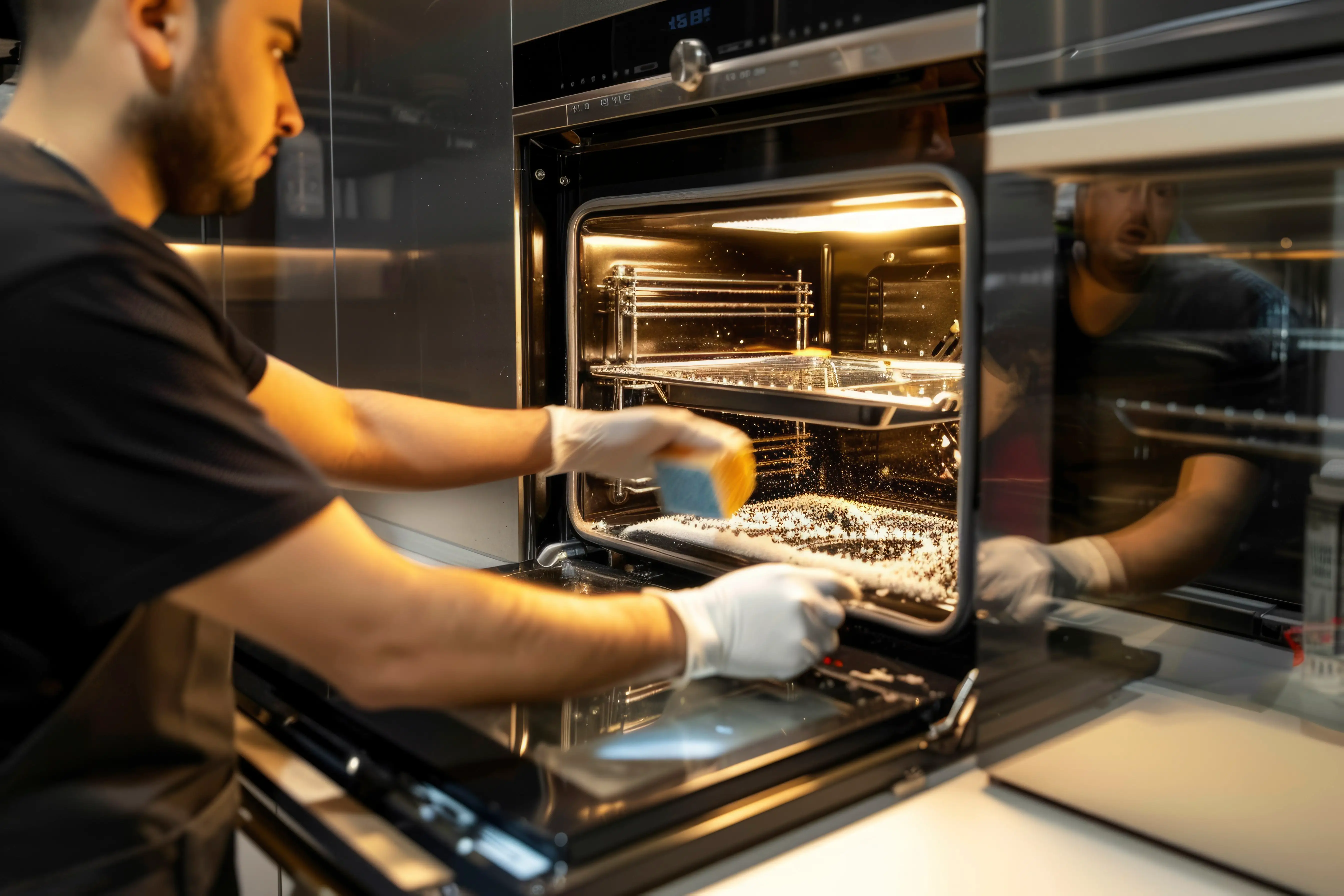
How to clean the oven effectively: where to start?
Knowing how to clean the oven starts before you apply any product. The first step is not scrubbing: it is preparing the cleaning properly. This helps remove residue, prevent damage and choose the right method for an oven with light or heavy built-up dirt. Whether you have an electric oven or a gas model, starting properly makes a difference to both the result and the time you will spend.
What to remove before cleaning: racks, trays and accessories
Before washing the oven, remove everything that can be taken out: racks, trays, the internal thermometer and other accessories. These parts collect food residue, sauce drips and greasy crusts, so they should be cleaned separately.
If you leave them to soak in hot water with a little detergent, it becomes easier to degrease the oven without spreading dirt around the rest of the interior. In a built-in oven, this step also gives you better access to the sides and the base. If there is a lot of burnt grease, do not force any parts or use metal tools that could scratch the coating.
The most common mistake when cleaning the oven while it is still warm
One of the most common mistakes is starting to clean while the appliance is still warm or hot. Besides the risk of burns, heat can cause certain cleaning products to dry too quickly and leave marks that are hard to remove.
The ideal approach is to switch it off, let it cool down completely and only then start cleaning. That way, you can use a damp cloth safely, control the amount of moisture better and protect sensitive areas such as seals, heating elements and the oven door. It also prevents thermal shock to the glass and reduces the risk of strong smells during cleaning.
How to assess the level of dirt before choosing the method
Not every oven needs the same approach. If there are only a few loose marks, some splashes and very little smell, regular cleaning or even light steam cleaning may be enough. But if you can see stuck-on grease, smoke when you switch it on or darkened residue on the base, you are dealing with built-up dirt that will take more time.
Look at four areas: the side walls, the base, the top and the glass. If you find grease marks, burnt grease or carbonised residue, this is no longer a light clean. This assessment helps you decide how to clean a very dirty oven without wasting time on methods that are too weak. It is also useful for understanding how to remove grease from the oven safely and without damaging the materials.
When to use quick cleaning vs deep cleaning
Quick cleaning works well after frequent use, when there are still no crusts or persistent bad smells. In these cases, cleaning the inside of the oven with a damp cloth and drying it well may be enough to prevent dirt from building up.
Deep cleaning is more suitable when the goal is to clean a greasy oven, remove old splashes and sanitise the oven thoroughly. If there is stuck-on grease, dried residue and a strong smell, it is worth choosing a more effective method, such as a baking soda paste, vinegar or lemon as support, or even automatic functions. In models with a pyrolytic function, it may make sense to use the self-cleaning cycle when the dirt is already deeply embedded.
How to clean the oven without damaging heating elements, seals and coatings
When thinking about how to clean an electric oven, it is essential to protect the most delicate components. Never apply product directly to heating elements, ventilation outlets, sensors or sealing rubbers. Too much moisture can affect how the appliance works and reduce its lifespan.
Always use very little water, soft cloths and controlled movements. Avoid abrasive scourers, metal scrapers and harsh mixtures unless they are genuinely needed. In ovens with pyrolytic cleaning, check the manual to see how to prepare the cycle: usually you need to remove the accessories, and at the end you only need to wipe away the ash with a soft cloth. The goal is not just to leave the oven clean, but also to eliminate smells, preserve the coating and keep the appliance safe.
Choose the right method
Light dirt: damp cloth, mild detergent and final drying.
Medium dirt: baking soda + water, with vinegar as support.
Heavy dirt: longer action time, deep cleaning and gradual grease removal.
Pyrolytic oven: use the pyrolytic function following the manual; at the end, wipe away the ash without scrubbing.
How to clean an electric oven with grease and burnt-on residue
In an electric oven, grease tends to dry out and cling more to the walls, base and corners. So when there is burnt grease and food residue, simply wiping over it is not enough. The goal is to loosen the dirt first and only then clean it. This makes it easier to degrease the oven, clean the inside with less effort and reduce the risk of damaging the coating.
Step-by-step method with baking soda and water
If you want to know how to clean an electric oven simply, the baking soda method is still one of the safest. Mix baking soda with a small amount of water until it forms a thick paste. Apply it to the dirty areas, especially where you can see dried splashes, crusts and stuck-on grease.
Avoid the heating elements, ventilation areas and sensitive fittings. Leave it to work for several hours or, ideally, overnight. Then remove the paste with a damp cloth. At this stage, the focus is on lifting softened residue, not scrubbing hard. This method works well for cleaning an oven with moderate grease and for keeping up a good regular cleaning routine without immediately resorting to strong chemicals.
How to use vinegar to loosen stubborn grease
Vinegar works best as support, not as a solution on its own. After removing most of the baking soda paste, spray vinegar onto areas where marks and stuck-on residue remain. The reaction helps loosen the final layer of grease and makes cleaning easier.
Wipe again with a damp cloth to lift the residue. If necessary, repeat only in the worst areas. This approach is useful when you need to remove grease from the oven and the dirt is stuck on, but does not yet require aggressive cleaning. It also helps eliminate smells left behind by burnt residue.
Baking soda + lemon: when this combination makes sense
Lemon can be useful when, along with grease, there is also a strong smell inside the appliance. It does not replace the action of baking soda, but it complements it well in natural cleaning situations. You can add a few drops of lemon to the paste or use it at the end, diluted in warm water, to freshen the interior.
This combination makes more sense for light to medium cleaning, or when you want to sanitise the oven and leave less odour behind without immediately turning to stronger cleaning products. If the main problem is old, thick crusting, lemon does little on its own.
How to clean a very dirty oven without scrubbing for hours
When the goal is to understand how to clean a very dirty oven, the secret is the contact time, not the force. First, remove any loose excess. Then apply the baking soda paste to the most critical areas and leave it on for as long as possible. Next, use vinegar only where the built-up dirt still resists.
If there are still difficult spots, repeat the process instead of insisting with abrasive scourers. Some models may have a self-cleaning programme or even a pyrolytic function. In those cases, it is worth checking the manual to see whether pyrolytic cleaning is suitable as the final stage, especially when the grease is deeply embedded.
How to remove burnt grease from the oven walls and base
The base and rear wall usually collect the worst dirt because they receive direct drips and hold heat. To treat these areas, apply a thicker layer of paste and leave it on for longer. When cleaning, use short, controlled movements with a cloth or soft sponge.
If you find greasy crusts or carbonised residue, do not scrape them with metal tools. The best option is to repeat the application until you gradually loosen the burnt grease. At the end, wipe several times with a clean damp cloth, dry thoroughly and leave the oven open for a few minutes. This helps prevent marks, improves drying and reduces new unpleasant smells.
How to remove grease from the oven and clean the door glass
After dealing with the inside, your attention should move to the oven door. This is where grease becomes more visible, and where many people feel the oven still looks dirty even after washing it. Knowing how to remove grease from the oven includes cleaning the glass properly, the frame corners and the areas where built-up dirt turns into stubborn marks.
How to clean the oven glass inside and out
If you are wondering how to clean oven glass, the most important thing is to adapt the method to the level of dirt. For recent marks, a damp cloth with warm water and a little mild detergent is enough. For more stubborn grease, apply a baking soda paste with a little water, leave it to work and remove it without excessive scrubbing.
If marks remain, you can use a small amount of vinegar to help loosen the residue. Lemon can also be useful for light cleaning, especially to freshen up and eliminate smells. Clean the inside and outside glass separately, finishing with a clean cloth to avoid streaks and leave the surface clear.
What to do when there is grease between the panes of glass
When grease appears between the panes of glass, cleaning is no longer so straightforward. In some models, the door allows partial disassembly; in others, this should only be done according to the manual. If you try to open it without guidance, you could misalign it or damage the fittings.
In these cases, first check whether the manufacturer allows access to the inside of the door. If it does, work carefully and only when the oven is completely cold. If there are no clear instructions, the best option is to avoid improvised disassembly. This is especially relevant in appliances with more delicate closing systems or in electric and gas ovens with different construction.
The oven areas almost everyone forgets, and that collect the most grease
When people think about how to remove grease from the oven, almost everyone only looks at the base and the glass. But there are areas that collect even more grease: the corners of the door frame, hinges, the lower edge, rack slots and the sides near the trays.
These areas trap food residue, dried splashes and small drops of burnt grease that often go unnoticed. In a regular cleaning routine, it is worth wiping these spots with a cloth to prevent dirt from building up and stop a hard-to-remove crust from forming later. It is this detail that makes the oven look genuinely clean, not just less dirty.
Cleaning for each type of oven: find the right method
Not all ovens are cleaned in the same way. The internal structure, the type of heating and the presence of ventilation or self-cleaning programmes all change the ideal method. To understand how to clean the oven without causing damage, it is important to adapt the cleaning to the appliance you have at home.
How to clean an electric oven
When thinking about how to clean an electric oven, the main point is protecting the internal components. Heating elements, sensors and air circulation areas should not be exposed to too much water or directly applied product. For that reason, cleaning should be controlled and done with a cloth, a soft sponge and very little moisture.
If there is built-up dirt, burnt grease or stuck-on food residue, the combination of baking soda and water remains one of the safest options. Vinegar can be used at the end to help loosen stubborn residue, and lemon makes sense when you also want to reduce smells. In models with a pyrolytic function, it is worth checking the manual to see when to use pyrolytic cleaning and how to remove the ash at the end of the cycle.
How to clean a gas oven
In a gas oven, extra care is needed around areas close to the burners and gas outlets. Before starting, make sure it is switched off and completely cold. The rule remains the same: very little water, no dripping products and extra care around sensitive parts.
To clean a greasy oven, start by removing the racks and trays. Then apply the chosen method only to the accessible internal surfaces. Avoid blocking holes, covering flame inlets or leaving product residue in functional areas. In a gas oven, proper cleaning also helps reduce smoke, improve performance and eliminate smells caused by burnt residue.
When to avoid harsh or abrasive products
Not every cleaning product is suitable for every oven. You should avoid harsh formulas when the interior has special coatings, delicate enamel, catalytic panels or self-cleaning systems. In these cases, using a degreaser that is too strong can damage the finish and compromise durability.
You should also avoid abrasive scourers, metal scrapers and very rough powders, especially on the oven door, the glass and sealing areas. Even when you are trying to work out how to clean a very dirty oven, forcing the cleaning is rarely the best solution. It is better to repeat the process, leave the product on for longer or use the method recommended by the manufacturer. That way, you can sanitise the oven, remove residue and prevent future dirt without damaging the appliance.
How to prevent dirt and keep the oven clean for longer
After learning how to clean the oven, the most practical way to save time is to stop grease from building up again. The best strategy is not to do a deep clean every time. It is to create a simple regular cleaning routine. This helps prevent dirt, reduces the build-up of burnt grease, avoids unpleasant smells and makes the oven last longer, whether it is an electric oven, a gas oven or a built-in model.
How often to clean the oven
The right frequency depends on how often you use it. An oven used several times a week needs more attention than one that is only switched on occasionally. Waiting too long allows small splashes to turn into built-up dirt that is difficult to remove.
Recommended maintenance checklist:
- After each use: wipe with a damp cloth once the oven has cooled down, to remove fresh splashes and small food residue
- Once a week: check the oven door, the glass and the base, especially if you often cook fatty foods
- Every 2 to 4 weeks: clean the racks and trays
- Every 1 to 2 months: do a more complete clean of the inside of the oven
- When there is a lot of smoke, a strong smell or visible crusting: move on to a deep clean or, if available, use the pyrolytic function according to the manual
This simple routine helps you avoid later having to think about how to clean a very dirty oven.
Simple habits after each use
The best results come from small but consistent actions. Whenever you finish cooking and the appliance is cold, remove crumbs, wipe away fresh splashes and check whether there is grease on the base. The less time residue stays inside the oven, the less chance it has to dry out and stick.
It also helps to use suitable dishes and avoid sauces or cheese overflowing onto the bottom. If you dirty the racks or trays, do not leave them for days. Washing these parts early makes the job much easier and reduces the need to use lots of cleaning products later on. That is how you can sanitise the oven with less effort and keep the appliance looking like new for longer.
How to avoid smoke and bad smells
Smoke often appears because of burnt grease and old residue stuck to the base or walls. Bad smells, meanwhile, usually happen when there is hidden food residue, moisture that has not dried properly or dirt near the ventilation. Prevention starts with everyday cleaning.
After cleaning, always dry the inside thoroughly and leave the door open for a few minutes. This helps remove moisture and reduce smells. When needed, you can do a natural clean with baking soda or a little lemon, but without overdoing it or relying on the same solutions every time. The most effective approach is still not giving grease time to harden. Prevention is simpler than having to degrease the oven all over again from scratch.
Natural products vs specific products: what works better?
In practice, there is no single right method for every situation. The best choice depends on the type of oven, the level of built-up dirt and the time you have available. For regular cleaning, natural solutions may be enough. But in cases of burnt grease, old crusts or a lot of grease on the base, specific cleaning products usually deliver a faster and more predictable result. The most important thing is understanding when each option makes sense, instead of trying to solve everything in the same way.
When to rely on baking soda, vinegar and lemon
Baking soda, vinegar and lemon work best in maintenance situations, moderate dirt and frequent cleaning. They are useful options for sanitising the oven, softening recent marks, removing loose residue and helping eliminate smells without immediately resorting to stronger formulas.
Baking soda is the most reliable base of this trio, especially for cleaning the inside of the oven and helping to loosen dried grease. Vinegar works well as support in the final removal of residue. Lemon can be useful for light cleaning or when you want to leave the oven smelling fresher after washing. Even so, these solutions have limits. When the goal is to clean an oven with deeply embedded grease, the result may require several applications. In other words, they are good natural cleaning options, but not always the most effective in heavy-duty cases.
When to use oven-specific degreasers
If you are dealing with greasy crusts, old marks, carbonised splashes or a typical case of how to clean a very dirty oven, a specific oven degreaser may be worth it. These products are formulated to tackle more stubborn grease and usually reduce physical effort considerably.
They make more sense when the dirt has already gone beyond what a routine with a damp cloth and baking soda can solve. They can also be useful in ovens used frequently, where the base, oven door, racks and trays collect repeated residue. Even so, not every product is suitable for every appliance. In an electric oven, a gas oven or a model with special coatings, it is important to check compatibility. And if the oven has self-cleaning or a pyrolytic function, it is best not to mix methods without checking the manual. In many cases, pyrolytic cleaning may be more appropriate than insisting on strong chemicals.
Mistakes to avoid when cleaning the oven
Knowing how to clean the oven is not only about choosing good products. It also depends on avoiding mistakes that leave marks, damage components or even make built-up dirt worse. Many problems happen not because of a lack of cleaning, but because of too much force, too much water or too much product. Whether you have an electric oven, a gas oven or a model with automatic functions, these are the mistakes that most compromise the result.
Abrasive scourers that scratch the interior
When there is burnt grease or very stubborn residue, it is tempting to use the rough side of the sponge or even a metal scraper. The problem is that this can scratch the enamel and wear down the internal coating. After that, the oven starts holding even more grease and cleaning becomes harder.
If you need to degrease the oven, the safest option is to leave the product on for longer and repeat the process, rather than scrubbing aggressively. This also applies to the oven door and the glass, where scratches are even more visible.
Too much water in sensitive areas
Another common mistake is using too much water, as if you were washing the oven out inside. The interior is not designed to be soaked. Too much moisture can seep into joins, seals, fittings and electrical components, especially in an electric oven.
The best option is always to work with a well-wrung damp cloth. That is enough to remove residue and clean without leaving standing water behind. In ovens with ventilation, this care is even more important, because moisture in the wrong places can affect performance and create bad smells afterwards.
Applying product to heating elements or ventilation
This is one of the riskiest mistakes. When trying to clean the inside of the oven, some people apply cleaning products directly onto heating elements, air outlets, sensors or ventilation grilles. This can leave residue on sensitive components and cause a strong smell when the oven heats up again.
Whether you use baking soda, vinegar, lemon or a dedicated degreaser, always apply the product to a cloth or only to the appropriate surfaces. Never force cleaning in technical areas. To sanitise the oven safely, it is better to clean around those points with controlled movements.
Closing the oven before it is completely dry
After cleaning, many people close the appliance straight away. It seems like a small detail, but it is not. If the inside is still damp, you may end up with an unpleasant smell, marks on the glass and the feeling that the cleaning was incomplete. On top of that, trapped moisture encourages sticky residue and can make built-up dirt worse over time.
At the end, wipe with a dry cloth and leave the door open for a few minutes. This simple step helps the interior dry better, prevents condensation and improves the feeling of a properly clean oven.
Frequently asked questions about how to clean the oven
How do you clean a very dirty oven without too much scrubbing?
If you want to know how to clean a very dirty oven, the best approach is to leave the product on for longer rather than increasing the force. A paste made from baking soda and water helps loosen burnt grease, food residue and built-up dirt. Then remove it with a damp cloth. If needed, repeat the process and use vinegar only on the most encrusted areas. In heavier cases, and if the appliance has a pyrolytic function, pyrolytic cleaning may be the most practical solution.
How do you remove grease from the oven with baking soda?
To remove grease from the oven with baking soda, mix baking soda with a small amount of water until it forms a paste. Apply it inside the oven, especially on the base and walls with grease, avoiding the heating elements and ventilation outlets. Leave it on for a few hours and remove it with a damp cloth. This method works well for cleaning an oven with moderate grease and helps degrease the oven without harsh products.
Can I use vinegar and baking soda in any oven?
Not always. Although vinegar and baking soda are common solutions, they should be used carefully in any electric oven or gas oven. Avoid applying them directly to heating elements, seals, sensors or self-cleaning areas. In models with special coatings or a pyrolytic function, always check the manual before using homemade mixtures. The safest method is to apply them only to dirty surfaces and remove them thoroughly at the end.
How long should I leave the products on?
It depends on the level of dirt. In a regular clean, 15 to 30 minutes may be enough. If there is burnt grease, dry crusting or a lot of built-up dirt, the ideal is to leave the product on for several hours or overnight. The longer the product stays in contact with the dirt, the easier it will be to remove residue without too much scrubbing. Afterwards, clean thoroughly, dry and leave the oven door open for a few minutes.
Need professional help? Our specialists are ready.
Request your quote now!