

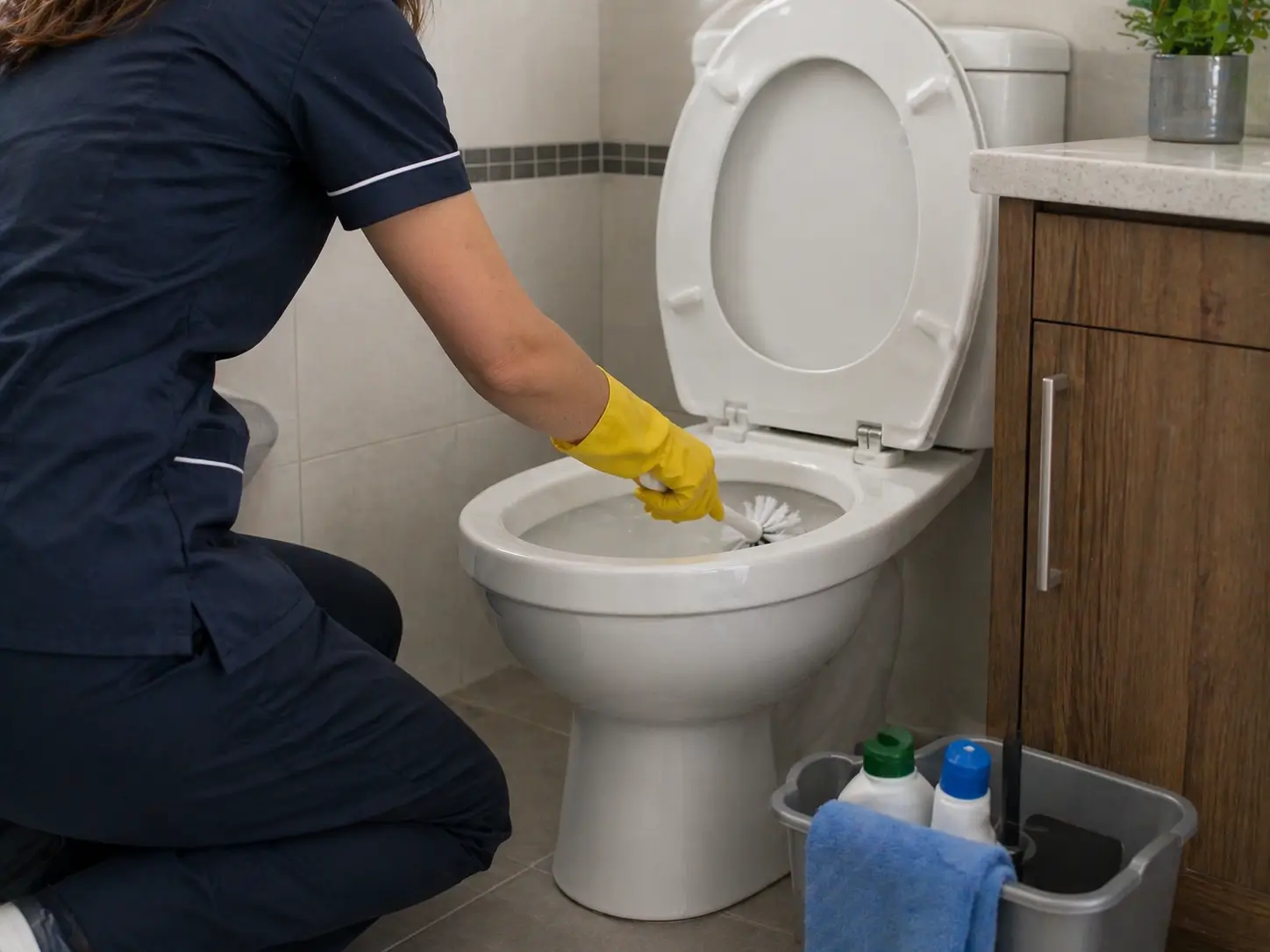
What you need to clean the bathroom effectively?
Before you start cleaning the bathroom, it helps to get everything you are going to use ready and follow a simple order. This reduces interruptions, avoids redoing tasks, and helps you get better results in less time. When there is a clear cleaning routine, cleaning the bathroom stops feeling like a major chore and becomes a faster, more organised, and more effective process.
Essential products and tools for a complete clean
To clean a bathroom effectively, it is best to gather a few materials, but the right ones. The most useful cleaning products are usually a multi-surface cleaner, a mild degreaser, a disinfectant for high-touch areas, and a dedicated limescale remover. In homes with a lot of moisture, it can also be useful to have an anti-fungal product for dark marks on grout or in corners.
Alongside the products, it is worth setting aside microfibre cloths, a non-abrasive sponge, a small brush for corners, gloves, and a mop or floor cloth. Having separate cloths for the mirror, sink, taps, and toilet helps maintain bathroom hygiene and prevents dirt from spreading from one area to another.
What to clean first to save time and avoid doing the job twice
The order matters, especially if you want to clean the bathroom efficiently. The most effective approach is to start with the highest and driest areas and finish with the dampest and dirtiest ones. First, remove loose items, towels, mats, and rubbish. Then move on to the mirror, shelves, and countertop surfaces. Only after that does it make sense to clean the sink, taps, shower tray, and, towards the end, the toilet and floor.
This sequence prevents drops, dust, or residue from falling onto areas you have already cleaned. It also makes it easier to deal with marks, splashes, and limescale build-up. When you follow this logic, it becomes easier to clean tiles, keep surfaces shiny, and reduce bad odours without constantly repeating steps. It is a small change that greatly improves day-to-day upkeep.
How to prepare the bathroom before you start cleaning
Good preparation speeds up the whole process. Start by opening the window or turning on the ventilation to refresh the air and help surfaces dry. This step is simple but important for controlling moisture, preventing unpleasant smells, and making cleaning more comfortable. Then remove personal items from the countertop, sink, and shower so you can clean without obstacles.
Next, quickly check where dirt has built up the most. If you notice limescale on the taps, marks on the mirror, residue on the floor, or stains in the shower area, apply the right products first and leave them to work for a few minutes. This waiting time helps remove limescale and dirt with less effort.
How to clean the bathroom step by step
Once you have prepared your materials and decided on the order, it becomes much easier to clean the bathroom without wasting time or missing important areas. The key is to follow a logical sequence, use the right cleaning products on each surface, and avoid spreading dirt from one area to another. This cleaning routine helps maintain hygiene, improves the overall appearance, and reduces the effort needed throughout the week.
Start with dust, rubbish, and loose surfaces
Before wetting anything or applying any product, remove the rubbish, mats, towels, and loose items from the countertop, sink, and shower. This first step makes surfaces easier to reach and prevents dirt from building up in hidden areas. Then use a dry or slightly damp cloth on shelves, the tops of cabinets, and other places where dust tends to settle.
Only then does it make sense to move on to wet cleaning. If you start by spraying products straight away, the dust turns into a layer that is harder to remove and can leave marks.
It is also a good idea to ensure some ventilation by opening the window or turning on the extractor fan.
How to clean the mirror without leaving streaks
The mirror should be cleaned early in the process, while the room is still relatively dry. Apply a suitable product to a microfibre cloth rather than spraying it directly onto the surface, to avoid excess liquid and marks around the edges. Clean with gentle, even movements until the finish is clear and shiny.
If there are toothpaste splashes, water spots, or cosmetic residue, leave the product to work for a few seconds before wiping. A second dry cloth can help give the final finish. Because the mirror reflects the whole room, any mark is very noticeable.
How to clean the sink, countertop, and taps
At this stage, focus on the surfaces used every day. Apply the product to the sink and countertop, scrub with a soft sponge, and remove soap residue, toothpaste, and small stains. On taps, water marks and limescale build-up are common, so you may need a specific product to remove limescale without damaging the finish.
After cleaning, dry all surfaces thoroughly with a dry cloth. This step makes a difference to the shine and helps delay new marks from appearing. If there are frequently touched areas such as handles and knobs, it is worth disinfecting them at the end. As well as improving hygiene, this reinforces the feeling of freshness and care in everyday use.
How to clean the toilet and ensure hygiene in the most critical area
When cleaning the toilet, start with the inside. Apply a suitable product, spread it well around the inner bowl, and leave it to work for a few minutes before scrubbing with the toilet brush. Then move on to the outside, including the lid, cistern, base, and high-touch areas. Use a separate cloth for this area to maintain bathroom hygiene and avoid cross-contamination.
Here, it is not enough for it to just look clean. It is important to disinfect the most frequently touched surfaces, especially in homes with several people. If unpleasant odours persist, check the base of the toilet, the area behind it, and where the seat fittings meet, as dirt tends to build up easily there.
How to clean the shower, bathtub, and shower enclosure
Leave this area until the end, because it is usually where the most soap residue, moisture, and limescale are found. Apply the product to the walls, tap, glass, and the base of the shower or bath. If you need to remove limescale or more stubborn marks, leave it to work before scrubbing. In shower enclosures, pay close attention to the grout and corners, where dirt tends to settle.
After rinsing, dry the surfaces thoroughly to prevent marks and make the clean feeling last longer. At the end, clean the floor, starting from the area furthest from the door and finishing near the exit. This way, you avoid stepping on areas you have already washed. With this order, you can clean the bathroom thoroughly, practically, and much more efficiently.
How to clean the bathroom in 30 minutes or less
There is not always time for a fully detailed clean, but that does not mean giving up on a bathroom that is clean, presentable, and hygienic. When there is a simple and realistic cleaning order, it is perfectly possible to clean in 30 minutes and achieve visible results. The aim here is not a deep clean, but to tackle what stands out most.
The fastest cleaning order for visible results
To clean the bathroom quickly, start by airing the space and removing rubbish, mats, and loose items. While fresh air is coming in, apply the cleaning products to the areas that need a few minutes to work, such as the toilet, sink, taps, and shower. This small head start saves time and reduces the effort needed for scrubbing.
Then follow a practical sequence: clean the mirror, move on to the sink and countertop, tackle the toilet, quickly clean the shower or shower enclosure, and finish with the floor. This order avoids doing the same work twice and helps you stay focused. If there is light limescale, splashes, or recent stains, it is usually enough to act straight away with the right product and finish with a dry cloth to restore shine to the surfaces.
In a quick clean, the final appearance matters a lot. A streak-free mirror, clean taps, a dry floor, and no unpleasant odours instantly change how the room feels. That is why, even when time is short, it is worth concentrating on the areas with the greatest visual impact and the most daily use.
What can wait for the weekly clean and what needs immediate attention
Not everything needs to be dealt with at the same frequency. In an efficient cleaning routine, some tasks can wait for the weekly clean while others should be dealt with straight away. What needs immediate attention is residue in the sink, the toilet, splashes on the mirror, excess water in the shower, and visible dirt on the floor. These areas directly affect bathroom hygiene and the sense of cleanliness.
Tasks such as deep cleaning the tiles, cleaning grout, removing older limescale, washing shower curtains, or organising cupboards can be left for a more thorough maintenance session. Separating the essentials from the secondary tasks helps you clean the bathroom with less pressure and better day-to-day results.
Mistakes that waste time during cleaning
One of the most common mistakes is starting without moving objects out of the way. This forces you to stop several times, shifts the dirt around, and breaks your rhythm. Another frequent mistake is not leaving products to work for long enough. When you try to clean straight away, you use more energy to remove limescale, residue, and stains that would come off much more easily after a few minutes.
Using the same cloth for everything also wastes time, especially between the sink, mirror, and toilet. As well as compromising hygiene, it can spread dirt and make you repeat steps. The same thing happens when the floor is washed too early and you then walk across the room again.
How to remove limescale and stubborn stains
Even with a good cleaning routine, some residue builds up over time and leaves the bathroom looking worn. Limescale on taps, and certain stains on the floor, grout, or shower enclosure, do not always come off with a quick clean. In these cases, the most important thing is to use the right product, respect the type of surface, and avoid aggressive solutions that solve the problem one day but create maintenance issues afterwards.
How to remove limescale from taps, glass, and the shower
Limescale often appears in areas where water dries repeatedly, such as taps, shower glass, the sink, and metal surfaces. To remove limescale effectively, apply a dedicated product or a suitable solution for the surface and leave it to work for a few minutes. This helps loosen the build-up without requiring as much scrubbing, which preserves shine and reduces wear.
On taps, use a soft cloth or a non-abrasive sponge to clean without scratching. On glass and in shower enclosures, spread the product well and focus on the cloudier areas or white marks. Then rinse and dry immediately. This step is essential to prevent new stains and keep the bathroom looking more cared for. When build-up happens frequently, the best strategy is not to repeat a heavy clean, but to improve maintenance by drying surfaces regularly after use.
How to deal with persistent stains without damaging surfaces
Not all stains should be treated in the same way. Soap residue, light rust marks, or dirt built up in grout need different approaches. The most common mistake is using products that are too harsh from the start, which can damage ceramic surfaces, metals, seals, and even the mirror if there is accidental contact.
Always start by identifying the source of the stain. If it is related to moisture, you may need to clean and disinfect the area, especially in corners, grout lines, or poorly ventilated spots. If the problem is grease, cosmetic residue, or dark marks on the floor, use suitable cleaning products and test them on a discreet area first. In many cases, leaving the product to work and repeating the process gently gives better results than scrubbing hard. This way, you can deal with stubborn stains without compromising the appearance or durability of the surfaces.
How to keep the bathroom hygienic for longer
After a good clean, the most important thing is not to let dirt build up again too quickly. Keeping the bathroom hygienic for longer does not require constant effort, but rather small, consistent habits. When there is a simple cleaning routine and a few daily habits in place, it becomes easier to reduce stains, control unpleasant smells, and preserve the shine of surfaces between more thorough cleans.
Daily habits that reduce dirt, moisture, and bad odours
The simplest actions are often the ones that make the biggest difference to maintenance. Rinsing the sink after use, wiping splashes from the mirror, lightly drying the taps, and checking whether the floor has been left wet all help prevent visible marks and the build-up of residue. These quick habits stop dirt from turning into a bigger problem after just a few days.
Another important habit is not leaving bottles, damp towels, and loose items lying around. The clearer the countertop and shower area are, the easier it is to clean the bathroom without obstacles. It also helps to empty the bin regularly and keep the toilet clean in the most frequently touched areas. This cleaning routine reduces the presence of bacteria, improves everyday comfort, and prevents bad smells from settling in.
Ventilation, drying, and organisation to prevent build-up
Ventilation plays a central role in bathroom hygiene. Whenever possible, open the window after a shower or use the extractor fan to release excess moisture. This step helps the shower, enclosure, tiles, and floor dry more quickly, reducing the risk of stains and unpleasant smells.
Drying also makes a difference. Running a cloth or squeegee over the shower glass, taps, and areas where water tends to collect is an effective way to prevent limescale and preserve shine. It does not take long, but it greatly improves how the bathroom looks throughout the week.
Tips to make your bathroom shine
A truly clean bathroom is not only noticeable because there is no dirt. You notice it in the shine of the surfaces, the sense of freshness when you walk in, and the way everything looks cared for, even without obvious effort. After cleaning the bathroom, it is the finishing details that turn a room that is merely tidy into a bathroom that shines.
Small details that improve the sense of cleanliness
There are small details that instantly change how the room looks. A streak-free mirror, dry taps, a sink free from residue, and a floor without splashes immediately create a sense of order and bathroom hygiene. Even when the cleaning was quick, these finishing touches make the space look more cared for and more pleasant to use.
Another important point is controlling unpleasant odours. A bathroom can look clean and still feel neglected if the air is heavy. That is why ventilation should be part of the cleaning routine. Opening the window or using the extractor fan helps refresh the air, reduce moisture, and preserve the results of bathroom cleaning for longer.
Frequently asked questions about how to clean the bathroom
How do you clean the bathroom quickly?
For a quick and effective clean, always follow the same order. First, air out the bathroom by opening the window or turning on the ventilation. Then apply the cleaning products to the areas that need a few minutes to work, such as the toilet, sink, taps, and shower. Next, clean the mirror to remove marks and restore shine, move on to the sink and countertop, tackle the toilet, clean the shower, and finish with the floor.
What is the best way to clean the toilet?
The best way to clean the toilet is to divide the task between the inside, the outside, and high-touch areas. On the inside, apply a suitable product, leave it to work, and scrub with the brush before flushing. On the outside, clean the lid, seat, base, and cistern with a separate cloth to avoid spreading dirt to other areas of the bathroom.
What products should you use to clean the bathroom?
Cleaning products should be chosen according to the task. For general cleaning, a multi-surface cleaner suitable for the sink, countertop, mirror, and some bathroom surfaces is usually enough. For more critical areas, such as the toilet and frequently touched points, it is important to use a product that can disinfect effectively.
How can you prevent bad smells in the bathroom?
To prevent bad smells, it is not enough to simply fragrance the room. The most important thing is to keep the bathroom clean, dry damp surfaces, and ensure good ventilation. When moisture is allowed to build up, unpleasant smells appear much more easily.
Need professional help? Our specialists are ready.
Request your quote now!